
Ever considered what might happen if you brought 200 of Australia’s brightest student innovators together for a weekend of humanitarian hacking?
Well, let me tell you. It was a masterpiece in humanitarian collaboration and revolutionary ideas! Hosted by The Warren Centre for Advanced Engineering in conjunction with the Pacific Telecommunications Council, the event ran from 24 to 26 July, and was the biggest collaboration of students across Australia for humanitarian purposes.
At the final bell, 32 innovative solutions were submitted to address the biggest humanitarian challenges facing the Pacific islands region.
The Winners
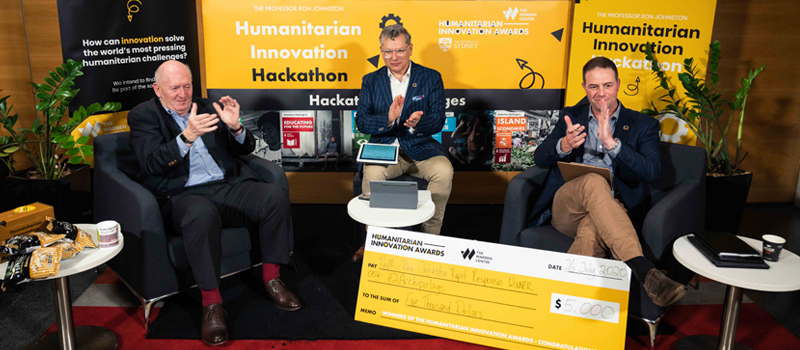
While there were a variety of awards, the top prize was awarded to H2ArchipelagO – Alex Hofmann from Monash University, Allan Soo from the University of Technology Sydney, Ben Hofmann and James Hurst from Australian National University, and Emily Unewisse from the University of Adelaide – winners of the RedR Ron Johnston Rapid Response Prize.
Their challenge was how to provide water for remote, dispersed, and isolated populations.
Their solution was a simple water filtration system and education program that would teach primary school children in a remote village in Vanuatu how to purify drinking water. The “Super Sand School Initiative” uses layers of material, such as gravel, coarse sand, charcoal, fine sand, and cloth to filter impurities. Their small-scale concept model can be recreated by anyone, anywhere in the world, using locally-sourced materials.
The Event
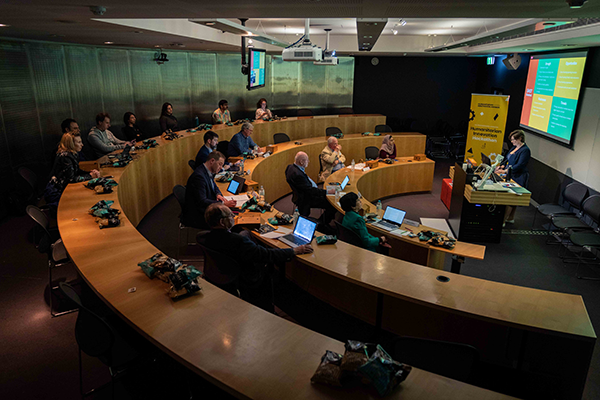
The Humanitarian Innovation Hackathon was a weekendlong virtual hackathon program with webinar speakers, team interaction, facilitated mentoring, and exciting diversions that mixed up the digital competition with social engagement to fire up team creativity.
This unique event welcomed participation from undergraduate competitors studying at Australian universities. Students worked collaboratively in cross-discipline teams to create innovative solutions for pressing humanitarian challenges. Participants identified practical solutions for real and current problems from an international humanitarian context.
Pivoting from the 2019 face-to-face format, the hackathon team adopted a virtual format for 2020, running a 52-hour livestream of video presentations by innovators, engineers, designers, and international humanitarian leaders.
This year, 400 students applied to participate in the hackathon and 200 were accepted for the challenge.
Executive Director Ashley Brinson couldn’t be more pleased with the outcome of this year’s event. “The range of innovation was stunning,” he explained. “But we were especially pleased by the way the student teams engaged with cultural factors and community inclusivity to imagine solutions reaching beyond a traditional engineering and tech focus.”
Project Manager Melanie De Gioia and her team fielded over 22,000 Slack messages in just three days, as teams were brought together in a way that inspired them to participate, regardless of their distance and remote isolation. Melanie assembled a crew of the most highly regarded humanitarian and innovative team mentors to nurture and support the students throughout their “concept to completion” journey.
“Students registered as individuals and then we placed them into teams. Throughout the registration process, we asked them personality profiling questions and challenge preferences, and we assigned teams based on those answers and their fields of study. So, each team was created to succeed. Formed with students from a number of different universities, every team had to find their own ways to collaborate. This approach is closely aligned to what they might experience if responding to a crisis in the real-world,” Melanie explained.
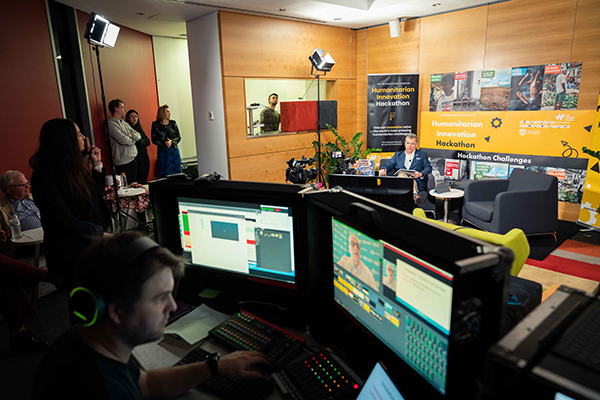
Marketing and Digital Communications Head Tennille Scicluna said, “This year was really something special. Not only were we coordinating over 250 people to do so many things remotely, we were also broadcasting the entire event live from our hack studio for three solid days via our HACKLIVE TV stream. We’ve had so many positive comments about our decision to make it a live TV-style event, and we are just so happy that the decision to go virtual live was a standout element to the Hackathon’s success.” Watch more on this.
With growing humanitarian needs and limited funding, innovative solutions are vital to assist the world’s most vulnerable groups in new and efficient ways. The Humanitarian Innovation Hackathon was funded by a generous grant from the Australian Centre for Innovation and sponsorship by the Pacific Telecommunications Council, GHD, Cardno, and Beyond Essential Solutions. The Professor Ron Johnston Prize in Humanitarian Innovation and the RedR Ron Johnston Rapid Response Prize acknowledge commitment to humanitarian causes. Prizes sponsored by the Pacific Telecommunications Council encourage students to demonstrate their concepts and engage in real-world impact. Overall, the program is aimed to change the way university students see sustainable development challenges in the world.
Let’s encourage young people to have great careers that matter.
Check out related news

iMiller Public Relations Marks 15 Years Advancing Digital Infrastructure Communications and Community Engagement

ZincFive Expands Nickel-Zinc Technology into In-Rack Backup and AI Dynamic Power Solutions

OceanBit Feature in Submarine Telecoms Forum Issue 150

TM Global Discusses the Role of Connected Infrastructure in Supporting AI Growth