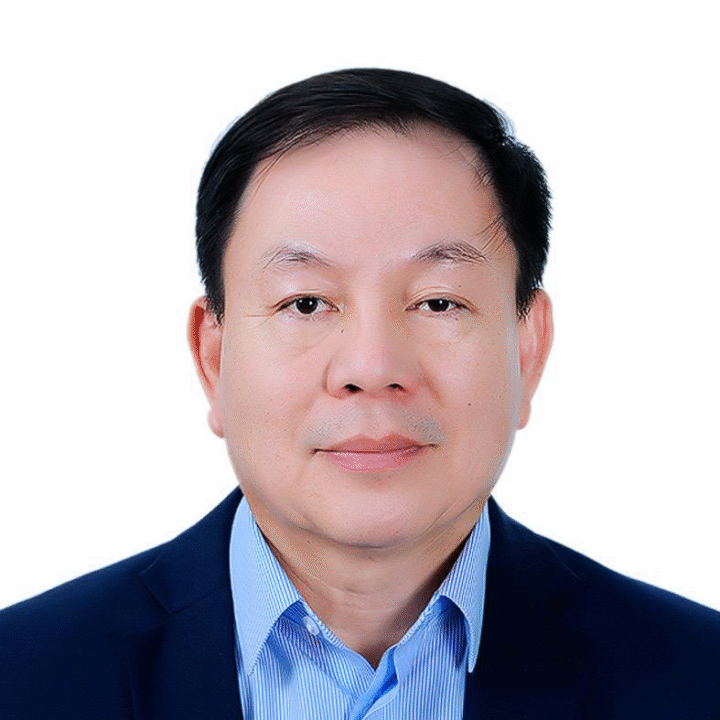
Julian Le Dang Dung

Chairman

Julian Le Dang Dung, Chairman of Stavian HighTech Infrastructure, brings decades of experience in high-level telecommunications leadership. Formerly the Chairman and General Director of Viettel Group, he is a renowned figure in the global and Vietnamese telecom landscape. At Stavian, he leverages this extensive experience to drive the MViSTA project, Southeast Asia’s newest digital infrastructure backbone. He is instrumental in navigating the regulatory and strategic complexities of subsea cable deployment, ensuring that MViSTA meets Vietnam’s national strategy for subsea network expansion. His vision focuses on establishing Vietnam as a primary regional cloud and data hub through open, neutral, and resilient infrastructure.
PTC: What network-related development will have the greatest impact in our industry?
JLDD: In our region of SE Asia, the shift toward “open” subsea cable architectures will be the most transformative development for regional connectivity. Traditionally, subsea systems were closed environments controlled by state owned telcos, but recently announced cable systems are privately owned and open. This allows customers to select their own terminal equipment and manage their fiber pairs independently, providing the control and scalability hyperscale’s need to grow. By decoupling the wet plant from the dry plant, we can foster a more competitive and innovative ecosystem that can adapt to rapid technological shifts much faster than legacy systems.
PTC: Is it important for companies to continue to innovate their organization or offerings, and why?
JLDD: Innovation is mandatory to support the explosive growth of AI and cloud services. At Stavian, we believe infrastructure must be “future-proofed” through technical flexibility. For instance, offering multiple fiber pairs and using ROADM (Reconfigurable Optical Add-Drop Multiplexer) technology allows for dynamic traffic management and per-segment fiber allocation. This ensures that as demand shifts between growing data center hubs like Singapore and Ho Chi Minh City, capacity can be rerouted in real-time. Without this level of continuous technical innovation, infrastructure quickly becomes a bottleneck rather than an enabler.
PTC: How can telecommunications technologies help humanity?
JLDD: Connectivity is the foundation of economic resilience and equity. By building subsea fiber systems, we are not just laying cable; we are powering the next generation of cloud and data hubs in emerging markets. Providing neutral, high-speed access to global internet exchanges and data centers allows local enterprises to compete on a global scale. This infrastructure bridges the digital divide, ensuring that the benefits of the AI revolution and digital trade are distributed across Southeast Asia, fostering regional stability and economic growth.
PTC: What advice would you share with current and future graduates interested in this field?
JLDD: I would advise graduates to look at the intersection of “physical” and “digital.” The future of technology isn’t just in software and AI; it’s in the massive physical infrastructure—the subsea cables and data centers—that makes AI possible. At Stavian HighTech, we grew from industrial production into high-tech infrastructure because we recognized that the “backbone” is where the most significant long-term impact lies. Learn the hardware, understand the geography of data, and focus on building things that last for a 25-year design life.
PTC: What industry mogul or up-and-coming leader have you followed or are currently pursuing, and why?
JLDD: I have closely followed the career and strategic insights of Sean Bergin, Co-Founder and President of APTelecom, and a long-standing member of the PTC Board of Governors. Sean is a true pioneer in the subsea sector, advocating for privately owned, open, and trusted operators to enter the market.
His leadership is particularly relevant to our mission at Stavian HighTech Infrastructure because he is a vocal advocate for building resilient, secure, and “open” infrastructure—principles that are at the very heart of the MViSTA project. Sean’s deep expertise in navigating the complex regulatory and commercial landscapes of emerging markets across the Asia-Pacific region has provided a blueprint for how we approach our own regional expansion.
PTC: What value does PTC hold for you/your company?
JLDD: PTC serves as the essential nexus for us between the cable systems operators, data center developers, and customers like hyperscalers and telcos. For a project like MViSTA, it allows us to engage directly with these companies, ensuring our infrastructure design meets the actual market demand for redundancy and route diversity.
PTC: How does PTC fit your company’s goals or career purpose?
JLDD: Our goal is to deliver Southeast Asia’s newest digital infrastructure backbone by 2028. PTC fits this mission perfectly by connecting us with the global subsea community—from contractors like the OMS Group or Subcom to financial backers like KKR. PTC provides a platform to share our vision of a more resilient, low-latency network that avoids traditional geographic issues and enhances regional diversity. At PTC, we transform technical feasibility studies into actionable industry partnerships.
About Stavian High Tech Infrastructure
Stavian HighTech Infrastructure, a member of the Vietnam-based Stavian Group, develops critical digital infrastructure across Southeast Asia. The firm specializes in delivering open, neutral, and resilient connectivity solutions for carriers and hyperscalers. Its flagship project, MViSTA (www.mvista.sg), is a 2,500km subsea cable linking Vietnam, Thailand, Malaysia, and Singapore. By leveraging a design capacity of 25 Tbps per fiber pair and advanced ROADM technology, Stavian HighTech empowers regional data hubs with the scalability and low-latency performance required for the next generation of global digital trade
More profiles
Gauri Potdar
Gauri Potdar

Jason Lathrum
Jason Lathrum
Julian Le Dang Dung
Julian Le Dang Dung
Susan Anderton
Susan Anderton
Bav Roy