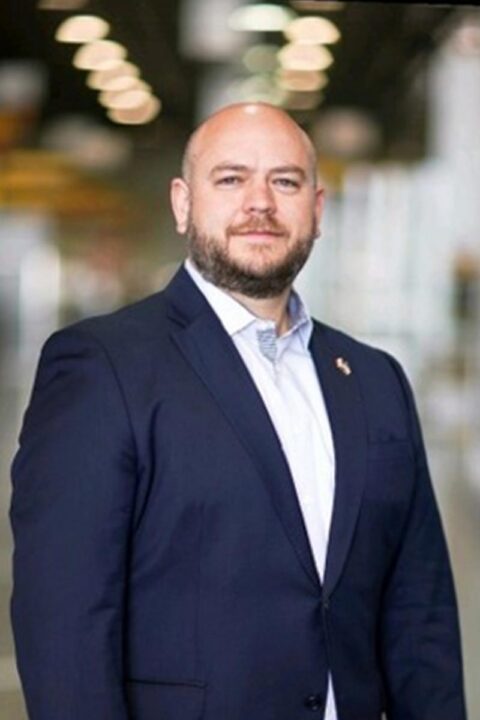
Ken Sullivan

Founder & CEO

Ken Sullivan is the founder and CEO of Bay Compute, a software company that unlocks 10-20% more sellable IT capacity in data centers by synchronizing power, cooling, and compute as one system, with no tenant SLA disruption. Bay Compute solves at scale the problem he once solved by hand. Ken holds an MBA from Harvard Business School.
What technology breakthrough would pave the way for the ICT industry?
KS: The industry keeps solving capacity constraints by building more. More power, more substations, more square footage. That approach is running out of runway faster than the grid can keep up. The real breakthrough is not new hardware. It is software that coordinates the infrastructure already in the ground. Power, cooling, and compute are managed as separate systems in almost every facility today, each with its own conservative safety margins stacked on top of the others. Nobody is watching the interaction between them in real time. When you synchronize those three systems instead of managing them in isolation, you recover double-digit percentages of capacity that already exists, without waiting years for new power to come online. In a world where AI demand is outpacing grid buildout in every major market, that kind of software-driven unlock is not a nice-to-have. It is the only thing standing between operators and multi-year power queues. That is the breakthrough the industry needs.
If one thing should be redeveloped within the telecom and related industries, what should it be?
KS: The default response to constrained capacity should not be capital expenditure. Right now, when a data center runs low on power, the instinct is to build. New substations, new cooling plants, new square footage. That takes years and enormous capital, and in power-constrained markets like PJM and ERCOT, the interconnection queue alone can take longer than the build itself. What should be redeveloped is the assumption that physical expansion is the first lever to pull. Most facilities are running well below their true capacity because power, cooling, and compute are managed independently, each with conservative safety margins that were never designed to talk to each other. Coordinating those systems in software surfaces capacity that already exists on site, with no new construction required. The industry needs to treat software-driven optimization as the first move, not the last resort after the capital has already been spent. That shift alone would change the economics of how operators plan growth.
Is it important for companies to continue to innovate their organization or offerings, and why?
KS: Yes, but innovation in this industry rarely happens alone. Data center infrastructure sits at the intersection of power utilities, hardware manufacturers, software providers, and the operators running the facilities day to day. No single company controls enough of that stack to solve the capacity problem by itself. The companies that will matter most over the next five years are the ones that treat partnerships as core strategy, not an afterthought. That means software providers working directly with DCIM platforms and sensor infrastructure already deployed, OEMs coordinating with the operators testing their hardware, and hyperscalers leaning on specialized partners for the pieces they cannot build internally. Innovation still has to happen inside a company. But in an industry this interconnected, it only reaches scale through partnership. Companies that try to own the entire stack themselves will move slower than the ones who build the right alliances and let each partner do what it does best.
How does PTC fit your company’s goals or career purpose?
KS: Bay Compute’s customer base spans data center operators and OEMs across the globe, and the capacity constraints we solve are not unique to any one region. Power scarcity, grid interconnection delays, and rising AI-driven demand are global problems. PTC’s network gives us direct access to operators, partners, and decision-makers across the Asia-Pacific region and beyond, markets where the same infrastructure pressures are playing out, often more acutely. On a personal level, PTC connects to where my own experience with this problem started. I spent years operating data centers in power-constrained environments across Southeast Asia and the Pacific, long before founding Bay Compute. PTC puts me back in the room with the operators and technologists tackling that same challenge at scale today. It is a rare community where the global telecom and infrastructure conversation actually happens, and that is exactly the conversation Bay Compute needs to be part of.
What value does PTC hold for you/your company?
KS: PTC gives us access to a concentrated, senior audience of operators, investors, and technologists who understand infrastructure constraints firsthand. That is a hard room to find. Most software conferences skew toward buyers who have never had to run a facility under real power or thermal pressure. PTC’s membership has. That matters for a company like Bay Compute, where the credibility of the pitch depends on the audience recognizing the operational problem before we even explain the solution. Beyond the audience, PTC’s relationships open doors into markets we are actively expanding into, where power scarcity can be more severe than in the U.S. The value is not just visibility. It is being inside a network where the people who can become customers, partners, or advocates are already fluent in the problem we solve.
What is something that not that many people know about you?
KS: Before founding Bay Compute, I spent eight years as a Marine Corps Special Operations Intelligence Officer, building and operating data centers in power-constrained environments across Southeast Asia and the Pacific. These were not clean, redundant facilities. I was managing racks on inconsistent grids, running manual power and cooling coordination by hand to keep systems online through generator failures and unreliable infrastructure. There was no software telling me where the slack was. I had to find it myself, in real time, with the mission depending on it. Bay Compute is not a company I built from a market analysis or a spreadsheet. It is the direct result of a problem I solved manually for years, later realizing the same coordination could be automated and scaled. The company exists because I lived the problem before I understood it as a business.
What advice would you share with current and future graduates interested in this field?
KS: Learn the physical layer before you learn the software layer. This industry is full of people who understand cloud architecture and almost none who understand how power, cooling, and physical infrastructure actually behave under real constraints. That gap is where the opportunity is. If you want to build something that matters in data centers or telecom infrastructure, spend real time close to the operational side, whether that is fieldwork, an internship at a facility, or just talking directly to the people running sites day to day. The best ideas in this space come from people who have felt the constraint firsthand, not from people who read about it. I did not start with a software background. I started by manually solving a capacity problem in the field, and that experience shaped everything I have built since. Get close to the operational reality first. The technical skills can follow.
About Bay Compute
Bay Compute helps data center operators sell more capacity on their existing power footprint. Our software continuously coordinates power, cooling, and compute in real time, replacing the static, siloed way facilities are run today. The result is 10-20% more revenue-generating capacity, no new construction, no added power draw, no capital expenditure, and no disruption to tenant operations or SLAs. We are solving one of the industry’s most expensive problems with code instead of concrete, at a moment when AI demand is outpacing the grid’s ability to keep up.
More profiles

Todd Raymond
Todd Raymond
Joseph Gilliland
Joseph Gilliland

Sushin Suresan
Sushin Suresan
Ken Sullivan
Ken Sullivan
Brett Manning